
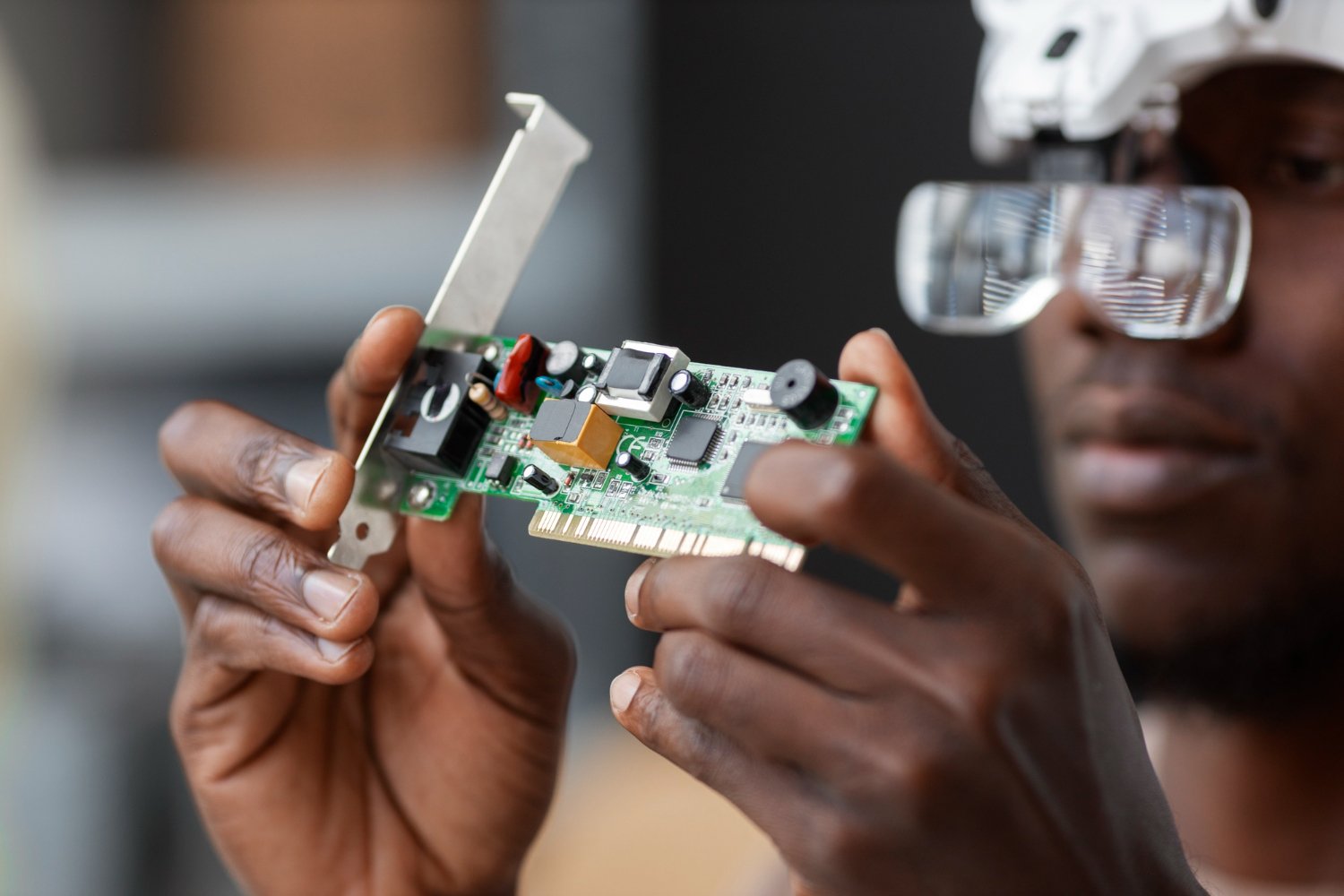
Every switch you flip, every transformer humming on a roadside pole, and every factory production line in Kenya depends on someone trained to install, maintain, and troubleshoot electrical systems safely.
That’s the practical, technically demanding world a diploma engineering qualification in electrical engineering prepares you for — one of the most consistently in-demand technical diplomas in the country.

This guide is for KCSE graduates deciding on their next step, craft-certificate holders looking to move up, and working technicians who want a formally recognised qualification. You’ll learn exactly what the course covers, the KCSE grades you need, how long it takes, what it costs, where to study it in Kenya, and what your career, licensing, and salary prospects genuinely look like — so you can decide with confidence whether this path is right for you.
What Is a Diploma in Electrical Engineering?
A Diploma in Electrical Engineering (also offered as Diploma in Electrical and Electronics Engineering, with Power, Telecommunications, or Instrumentation and Control options) is a KNEC-examined, technical, mid-level qualification that trains students in electrical installation, power systems, electronics, and industrial maintenance. It’s among the most widely offered engineering diplomas in Kenya, available at nearly every national polytechnic, technical training institute, and several universities.

Quick definition for search: An electrical engineering diploma in Kenya is typically a 3-year, KNEC-examined TVET programme (structured in three modules) that trains students in electrical circuits, power systems, electronics, and industrial control, preparing graduates for roles such as electrical technician, maintenance engineer, or site electrician, and providing a pathway into a Bachelor’s degree in electrical or electronic engineering.
Why Choose This Diploma in Kenya
Kenya’s electricity sector — from national grid expansion and rural electrification to the fast-growing renewable energy and telecommunications industries — needs a steady supply of technically trained people who can install, maintain, and troubleshoot electrical systems safely. Manufacturing, construction, and the booming solar/renewable energy sector add even more demand.
Reasons Kenyan students choose this diploma:
- Consistent, practical demand — electrical systems need ongoing installation, maintenance, and repair regardless of economic conditions.
- Widely available — offered at nearly every national polytechnic, technical training institute, and several universities across the country.
- Clear licensing pathway through the Energy and Petroleum Regulatory Authority (EPRA), giving diploma holders a real, government-recognised credential to work legally as electrical workers or contractors.
- Strong progression pathway into a Bachelor’s degree in Electrical/Electronic Engineering at universities offering credit transfer.
- Multiple specialisation options, including Power, Telecommunications, Electronics, and Instrumentation and Control.
Admission Requirements for Diploma in Electrical Engineering in Kenya
Requirements are broadly consistent across public TVET institutions, though some variation exists between colleges and specialisation options. Always confirm directly with your chosen institution before applying.

Minimum KCSE Grades Required
| Institution type | Typical minimum requirement |
|---|---|
| Most public TVET institutions/national polytechnics | KCSE mean grade of C- (minus), with passes in Mathematics, Physics, and English |
| Multimedia University of Kenya (Telecommunication option) | KCSE mean grade of C- (minus) or an equivalent craft certificate |
| Some polytechnics (stricter route) | KCSE mean grade of C (plain) with C- in Mathematics or Physics |
| Craft certificate holders | Pass in a relevant Craft Certificate in Electrical/Electronics Engineering, often with possible exemption into a later module |
In short: Most public TVET institutions want at least a C- (minus) mean grade at KCSE, generally with passes in Mathematics, Physics, and English, since the coursework is calculation-heavy and technical from the start. A smaller number of institutions set the bar slightly higher at a C plain. Because this diploma is examined by KNEC across nearly all providers, requirements are fairly standardised, but always verify with your specific college.
Alternative entry routes commonly accepted include:
- A pass in a relevant Craft Certificate in Electrical and Electronics Engineering (may qualify for exemption into Module 2)
- Division II or III at KCE for older applicants
- A relevant certificate in electrical engineering from a recognised institution
Because entry requirements do vary by institution and specialisation option, always confirm current grade requirements directly with your shortlisted college’s admissions office before applying.
Read also: Diploma in Business Management in Kenya: Requirements, Colleges & Careers (2026)
Course Duration
The Diploma in Electrical Engineering is structured in three modules, each roughly one academic year (three terms) long, for a total of about 3 years.
- Each module is examined by the Kenya National Examinations Council (KNEC) before a student proceeds to the next.
- Some institutions run modules on a more compressed schedule — one listing shows a full course completed over 9 trimesters, effectively still around 3 years.
- Craft certificate holders who performed well in their craft course may be exempted from Module 1 and admitted directly into Module 2, shortening their overall timeline.
- Intakes at most public institutions typically run in January, May, and September.
What You Will Study: Course Units
The diploma covers a broad technical curriculum, generally including:
- Electrical Circuit Theory
- Electrical Machines and Power Systems
- Electronics (Analogue and Digital)
- Electrical Installation and Wiring Practice
- Instrumentation and Control Systems
- Power Distribution and Transmission
- Telecommunications Principles (for the telecommunications option)
- Industrial Electronics and Automation
- Engineering Drawing
- Engineering Mathematics
- Workshop Technology and Safety
- Computer Applications in Engineering
- Industrial Attachment
Depending on the institution, students choose or are placed into a specific option — commonly Power, Electronics, Telecommunications, or Instrumentation and Control — which shapes the later, more specialised units in Modules 2 and 3.
Skills You Will Gain
By the end of the diploma, you should be able to:
- Design, install, and test electrical wiring and installation systems safely
- Read and interpret electrical circuit diagrams and schematics
- Maintain and troubleshoot electrical machines, motors, and power systems
- Apply electronics principles to industrial control and automation systems
- Carry out basic power distribution and transmission tasks
- Follow electrical safety codes and workplace safety procedures
- Use test instruments (multimeters, oscilloscopes, and similar equipment) competently
- Prepare technical reports and maintenance documentation
Career Opportunities After the Diploma
Graduates take up hands-on technical roles across utilities, manufacturing, construction, and telecommunications. Common entry points include:
- Electrical technician — installing, maintaining, and repairing electrical systems in industrial, commercial, or residential settings
- Maintenance technician/engineer — supporting electrical maintenance in factories, hospitals, or commercial buildings
- Site electrician — working on construction sites installing electrical systems for new buildings
- Power distribution technician — supporting utility companies with grid maintenance and fault response
- Telecommunications technician — for graduates specialising in the telecommunications option
- Instrumentation and control technician — supporting industrial automation and process control systems
Kenya Power (KPLC), the national utility, is one of the largest employers of diploma holders in this field. KPLC’s own recruitment notices specify that technician roles require a Diploma in Electrical Engineering (Power Option, Electronics Option, or Telecommunications Option) from KNEC or an equivalent recognised institution, with those achieving credit passes and IT skills given preference. KPLC also runs regular diploma-level industrial attachment programmes, a route many graduates use to get their foot in the door.
Private sector job postings reflect similar entry points: one manufacturing firm sought an Electrical Technician with a diploma or degree and at least five years of experience for KSh 80,000 monthly, while another listing for two Electrical Technicians in Nairobi offered KSh 40,000 monthly for candidates with a diploma and three years of experience, explicitly requiring a valid EPRA licence.
Expected Salary in Kenya
Salaries vary by role, sector, experience, and licensing status:
- Entry-level electrical technician roles with a diploma: commonly advertised in the KSh 35,000–45,000 range for early-career technicians, based on current job listings.
- Mid-to-senior technician roles with 3–5+ years of experience: current listings show salaries ranging from around KSh 40,000 up to KSh 80,000, depending on sector (manufacturing tends to pay more than general installation work) and whether the role requires a valid EPRA licence.
- Specialised roles (PLC programming, industrial automation, instrumentation) tend to pay more — related salary survey data for PLC Programmer roles in Kenya shows 80% of earners falling between roughly KSh 46,000 and KSh 140,000 monthly, though this typically requires additional specialised training beyond the base diploma.
These figures come from current job advertisements and salary survey platforms rather than an official government wage survey, so treat them as indicative ranges — actual pay depends heavily on employer, sector, region, and your EPRA licensing status.
Industries That Employ Graduates
- Kenya Power and Lighting Company (KPLC) and other utility companies
- Manufacturing and industrial plants
- Construction and real estate development firms
- Telecommunications companies
- Solar and renewable energy companies
- Hospitals, hotels, and large commercial facilities (facilities/maintenance departments)
- Engineering consultancy and contracting firms
Self-Employment Opportunities
Many diploma holders eventually become independent electrical contractors, taking on residential and small commercial wiring, maintenance, and repair jobs directly. To do this legally in Kenya, you must hold a valid EPRA Electrical Worker licence (and, if running a contracting business, an EPRA Electrical Contractor licence) — covered in detail below. Operating without these licences is not just risky but increasingly enforced, since EPRA regulations require anyone constructing, operating, maintaining, inspecting, or repairing electrical installations to be a licensed electrical worker, or to work under the supervision of one.
Best Colleges Offering Diploma in Electrical Engineering in Kenya
This diploma is one of the most widely available technical qualifications in Kenya, offered at national polytechnics, technical training institutes, and several universities. Notable examples include:
National Polytechnics and Public TVET Institutions
- Kenya Coast National Polytechnic — Electrical and Electronic Engineering department, offering diploma tracks in Telecommunication Engineering, Instrumentation and Control Engineering, and Electrical Installations, with a minimum C- entry requirement and passes in Mathematics, Physics, and English.
- Kiambu Institute of Science and Technology — Diploma in Electrical and Electronics Engineering, with a minimum C- entry requirement or a pass in a relevant craft course.
- Kenya Institute of Applied Sciences — accepts either a KCSE mean grade of C- or a passed artisan course in electrical installation.
- Numerous other national polytechnics and county-level Technical Training Institutes (TTIs) across Kenya run this diploma, since it’s one of the most consistently offered TVET programmes nationwide.
Universities Offering the Diploma
- Multimedia University of Kenya — Diploma in Electrical and Electronics Engineering (Telecommunication option), with a minimum KCSE C- or equivalent craft certificate.
- Mount Kenya University — School of Pure and Applied Sciences, offering the diploma with entry requiring a C in KCSE plus specific subject passes.
- Turkana University College — offers the diploma with a C-/D+ entry route in relevant subjects or a KNEC Craft Certificate.
Private Colleges
- Private technical colleges such as Beam International Training Centre and others across the country offer accelerated or KNEC-aligned diploma tracks, often with shorter overall durations (some as short as 18 months) but generally narrower in scope than the full 3-year KNEC diploma.
Note: Because this diploma is offered at such a large number of institutions, workshop facilities, lab equipment quality, and KNEC pass rates vary. Always check an institution’s accreditation status and practical training facilities before enrolling — electrical work is inherently safety-critical, and hands-on training quality matters significantly for your eventual competence and employability.
Read also: Diploma in HR Management Kenya: IHRM Guide 2026
Course Fees
Fees for electrical engineering diplomas vary by institution type:
- Public TVET institutions and national polytechnics generally offer the most affordable option, though published figures vary. Comparable public technical diploma fee structures commonly show tuition in the range of roughly KSh 12,000–27,000 per term, plus registration, examination, and other charges — though these vary significantly by specific institution and programme.
- Private colleges vary widely: some accelerated private programmes have been advertised around KSh 12,000 per month (roughly KSh 48,000 per year), though shorter private tracks may not carry the same full recognition as the standard 3-year KNEC diploma.
- Expect additional costs for registration, KNEC examination fees, workshop/lab materials, safety equipment, and industrial attachment expenses.
Because fee structures are revised regularly and differ significantly between public and private institutions, request the current, itemised fee structure directly from your shortlisted college before committing.
HELB and Scholarship Opportunities
Diploma students at recognised TVET and university institutions in Kenya can apply for government funding through the Higher Education Loans Board (HELB) and the Higher Education Financing (HEF) portal.
For the 2025/2026 academic year, the government raised HELB’s allocation from KSh 36 billion to KSh 41 billion, with funding expected to support over 237,000 TVET trainees alongside university students. Both first-time and continuing undergraduate and TVET students can apply for loans and scholarships through the HEF portal at portal.hef.co.ke.
For the 2026/2027 academic year, HELB opened first-time applications for undergraduate and TVET loans and scholarships in July 2026, with applicants required to have an official admission letter before applying, and the process completed entirely online.
To apply for HELB/HEF funding as a diploma student:
- Confirm your institution and diploma programme are TVET/HELB-recognised.
- Create or log in to your account on the HEF portal (portal.hef.co.ke) using your National ID or KCSE index number.
- Upload required documents, including your admission letter.
- Complete your funding application (loan, scholarship, or both) before the stated deadline.
- Track your application status through the portal or the HELB mobile app.
Professional Registration: EPRA and Engineering Technology Regulators
Electrical work in Kenya is genuinely regulated, and understanding the licensing landscape is essential for anyone planning a career in this field.
EPRA Electrical Worker and Contractor Licensing
The Energy and Petroleum Regulatory Authority (EPRA) licenses individual electrical workers and electrical contractors in Kenya. Under EPRA regulations, a person may not construct, operate, maintain, inspect, or repair electrical installations unless licensed, or unless working under the supervision of a licensed electrical worker — making this licence a practical necessity, not an optional extra, for anyone doing electrical installation work independently.
EPRA’s technical qualification table shows a clear route for diploma holders specifically:
| Academic qualification | Technical qualification | Starting licence class | Highest licence achievable |
|---|---|---|---|
| KCSE | Electrical Technician Part II/III, Final Craft Certificate, or Diploma in Electrical Engineering | Class C2 | Class A1 |
| KCSE | Higher National Diploma, BSc in Electrical Engineering | Class C1 | Class A1 |
This means a Diploma in Electrical Engineering qualifies you to work toward the highest available electrical worker licence class (A1) in Kenya — a genuinely strong outcome for a diploma-level qualification, though you’ll typically progress through the licence classes over time based on experience and further assessment, rather than jumping straight to A1.
Licence classes and fees (Electrical Workers):
| Class | Application fee | Grant fee | Annual renewal fee |
|---|---|---|---|
| A1 | KSh 1,000 | KSh 5,000 | KSh 2,000 |
| A2 | KSh 1,000 | KSh 5,000 | KSh 2,000 |
| B | KSh 750 | KSh 3,000 | KSh 1,000 |
| C1 | KSh 500 | KSh 2,000 | KSh 750 |
| C2 | KSh 250 | KSh 1,000 | KSh 500 |
A licence is valid for three years, with an annual renewal fee payable each year within that period. Applications are made through the EPRA online licensing portal, with scanned academic documents, a National ID, and the applicable fees.
If you plan to run your own electrical contracting business rather than working as an employed technician, you’ll separately need an EPRA Electrical Contractor licence, which requires details of your licensed electrical worker(s), company registration documents, and details of your office premises, tools, and equipment.
Engineering Technology Registration (KETRB/IET-K)
Separately from EPRA’s trade-specific licensing, Kenya also regulates the broader engineering technology profession through the Engineering Technology Act, 2016, which established the Kenya Engineering Technology Registration Board (KETRB). This framework is specifically for engineering technologists and technicians — the category diploma holders in electrical engineering typically fall into — as distinct from the Engineers Board of Kenya (EBK), which registers degree-holding professional Engineers.
Diploma and higher diploma holders can join the Institution of Engineering Technologists and Technicians – Kenya (IET-K), the professional body for this cadre, which offers networking, continuing professional development, and formal recognition as a registered engineering technician or technologist. As of 2026, IET-K and KETRB have registered roughly 15,000 engineering technology professionals, though full implementation of the regulatory board has faced delays, with industry leaders continuing to call for its complete operationalisation.
In short: as a diploma holder, your two most relevant professional credentials are an EPRA licence (if doing hands-on electrical installation/contracting work) and IET-K/KETRB registration (as your formal professional recognition as an engineering technologist or technician) — neither of which requires a full engineering degree, unlike EBK registration as a professional Engineer.
Advantages of This Diploma
- Consistently in demand across utilities, manufacturing, construction, and telecommunications
- Clear, government-recognised licensing pathway through EPRA, up to the highest licence class (A1)
- Widely available across national polytechnics and TVET institutions nationwide
- Strong progression pathway into a Bachelor’s degree in electrical/electronic engineering
- Multiple specialisation options (Power, Electronics, Telecommunications, Instrumentation and Control) to match different career interests
Disadvantages and Honest Challenges
- Safety-critical, hands-on work: Electrical work carries genuine physical risk, and rigorous adherence to safety procedures is non-negotiable throughout your career.
- Additional licensing required for independent practice: A diploma alone doesn’t authorise you to work independently — you’ll need an EPRA licence, which involves its own application, fees, and periodic renewal.
- Career ceiling without further study for design/engineering roles: Senior electrical design and consulting engineering roles increasingly require a degree and EBK registration; a diploma positions you strongly for technician and technologist roles, not for signing off as a professional Engineer.
- Wide variation in training quality: With so many institutions offering this diploma, workshop and lab equipment quality varies significantly — under-resourced colleges can leave graduates less prepared for real fieldwork.
Who Should Take This Course?
This diploma is a strong fit for:
- KCSE graduates who enjoy practical, technical, hands-on work and are comfortable with calculation-heavy coursework
- Craft certificate holders in Electrical/Electronics Engineering who want to progress to diploma level, potentially with unit exemptions
- People already working informally in electrical installation who want a formal, KNEC-recognised qualification and EPRA licensing route
- Students planning to use the diploma as a stepping stone into a Bachelor’s degree in Electrical or Electronic Engineering
It may be less suitable for those specifically aiming to become a fully registered, EBK-licensed Professional Engineer as quickly as possible — for that goal, direct entry into a Bachelor’s degree in Electrical Engineering (where your KCSE grades qualify, typically C+ and above with strong Mathematics and Physics) is a more direct route, though the diploma-then-degree pathway remains valid and more affordable for many students.
Common Mistakes Students Make
- Assuming the diploma alone lets you legally work independently — EPRA licensing is a separate, necessary step for electrical installation and contracting work.
- Skipping EPRA licence applications after graduating, then struggling to find employers willing to hire without one, since many job postings now explicitly require a valid licence.
- Choosing a college without checking workshop and lab facilities, which matters enormously in a hands-on, safety-critical field.
- Not confirming HELB/HEF eligibility before enrolling, then struggling to fund the programme.
- Underestimating the mathematics and circuit theory components, which are foundational and calculation-heavy from Module 1 onward.
Tips for Succeeding in the Course
- Take Engineering Mathematics and Circuit Theory seriously from Module 1 — they underpin everything that follows.
- Use industrial attachment strategically, particularly with utilities like KPLC or established contractors, since many graduates get their first job lead this way.
- Apply for your EPRA Electrical Worker licence soon after graduating — it directly expands the jobs you’re eligible for.
- Register with IET-K as an engineering technologist/technician for professional recognition, networking, and continuing development opportunities.
- If aiming for a degree later, confirm credit-transfer requirements with your target university early in your studies.
Frequently Asked Questions
1. What is the minimum grade needed for a diploma in electrical engineering in Kenya? Most public TVET institutions require at least a C- (minus) mean grade at KCSE, ideally with passes in Mathematics, Physics, and English. Some institutions require a C plain. Requirements vary by institution, so confirm directly with your chosen college.
2. How long does a diploma in electrical engineering take? Typically 3 years, structured as three modules of about one academic year each, examined by KNEC at the end of each module. Some accelerated private tracks run shorter, though with narrower scope.
3. Can I join the diploma if I only have a Craft Certificate in Electrical Engineering? Yes. Craft certificate holders can generally progress to diploma level, and depending on performance, may qualify for exemption directly into Module 2 rather than starting from Module 1.
4. Do I need an EPRA licence to work as an electrician after my diploma? Yes, if you plan to construct, operate, maintain, inspect, or repair electrical installations independently. EPRA regulations require electrical workers to be licensed, or to work under the supervision of a licensed worker. A Diploma in Electrical Engineering qualifies you to work toward the highest licence class (A1).
5. Can I get a HELB loan for an electrical engineering diploma? Yes, if your institution and programme are TVET/HELB-recognised. Apply through the HEF portal (portal.hef.co.ke) as a first-time or continuing applicant during the open application window.
6. What jobs can I get with a diploma in electrical engineering? Common entry points include electrical technician, maintenance technician, site electrician, power distribution technician, and telecommunications or instrumentation technician roles, across utilities, manufacturing, construction, and telecommunications firms.
7. What is the salary for a diploma holder in electrical engineering in Kenya? Entry-level electrical technician roles are often advertised around KSh 35,000–45,000 monthly, while more experienced technicians with 3–5+ years’ experience have been advertised between roughly KSh 40,000 and KSh 80,000, depending on sector and EPRA licensing status. Actual pay depends heavily on employer and experience.
8. Can I upgrade from a diploma to a degree in electrical engineering? Yes. Several universities accept diploma holders with a relevant diploma or higher diploma (often requiring a credit pass) into a Bachelor’s degree in electrical/electronic engineering, though full EBK registration as a professional Engineer still requires completing that degree and the board’s registration process.
9. Which institutions offer the diploma in electrical engineering in Kenya? This diploma is offered at nearly every national polytechnic and technical training institute, including Kenya Coast National Polytechnic and Kiambu Institute of Science and Technology, as well as universities like Multimedia University of Kenya and Mount Kenya University.
10. What is the difference between EPRA licensing and EBK registration? EPRA licenses individual electrical workers and contractors to legally carry out electrical installation, maintenance, and repair work — diploma holders qualify for this. EBK (Engineers Board of Kenya) registers professional Engineers, generally requiring a Bachelor’s degree in engineering; diploma-level professionals instead register as engineering technologists/technicians under KETRB and IET-K.
11. What subjects will I study in this diploma? Common units include Electrical Circuit Theory, Electrical Machines and Power Systems, Electronics, Electrical Installation and Wiring Practice, Instrumentation and Control, Power Distribution, Engineering Mathematics, Workshop Technology, and Industrial Attachment.
12. What is the difference between the Power, Electronics, and Telecommunications options? The Power option focuses on electrical power systems, distribution, and installation; the Electronics option focuses on electronic circuits and devices; the Telecommunications option focuses on communication systems and networks. Most institutions share a common foundation in earlier modules before students specialise.
13. Can I work for Kenya Power (KPLC) with this diploma? Yes. KPLC is one of the largest employers of diploma-level electrical technicians in Kenya, regularly recruiting for technician roles and running diploma-level industrial attachment programmes, with preference generally given to candidates with credit passes and IT skills.
14. Do I need to specialise to get a good job, or is the general diploma enough? A general Diploma in Electrical Engineering (Power option, most commonly) is sufficient for most entry-level technician roles. Specialisation in areas like instrumentation, automation, or telecommunications can open doors to higher-paying, more technical roles, but usually with additional experience or further training on top of the base diploma.
Final Verdict
A Diploma in Electrical Engineering is one of Kenya’s most practical and consistently in-demand technical qualifications — well suited to KCSE graduates who enjoy hands-on, technical work and want a genuine, government-backed licensing pathway through EPRA. It works especially well as both a direct route into technician roles at major employers like Kenya Power, and as a stepping stone into a Bachelor’s degree in electrical or electronic engineering. Just go in with realistic expectations: the work is safety-critical and requires ongoing licensing (EPRA) to practise independently, and reaching senior engineering design roles typically requires further study and EBK registration on top of the diploma itself.
Next steps: Shortlist two or three institutions from those listed above, confirm their current KCSE grade requirements, fees, and workshop/lab facilities directly with each admissions office, and check your HELB/HEF eligibility before applying. After graduating, apply for your EPRA Electrical Worker licence and consider IET-K registration early — using official, up-to-date information from KUCCPS, HELB, EPRA, and your chosen institution to guide each step of your decision.
Read also: