If you love working with your hands, have an eye for detail, and enjoy helping people look and feel their best, a Diploma in Beauty Therapy could be one of the most practical courses you take in Kenya today.
This guide covers everything a KCSE graduate, career-changer, or parent needs to know: entry requirements, where to study, how much it costs, what you’ll learn, and what your salary and job prospects look like once you graduate.

This article is written for KCSE leavers deciding on a course, working adults considering a switch into cosmetology, and parents comparing beauty colleges Kenya has to offer.
By the end, you’ll know exactly what to check before you enroll and how to avoid the mistakes that trip up many first-time beauty students.

What Is a Diploma in Beauty Therapy?
A Diploma in Beauty Therapy (sometimes offered jointly as a diploma in hairdressing and beauty therapy or under the umbrella term cosmetology diploma) is a technical training programme that equips learners with practical and theoretical skills in skincare, hair care, nail technology, makeup application, spa treatments, and salon or spa management.
In Kenya, beauty therapy training is offered at several levels:
- Certificate level (Grade III, II, I or NITA Grade 6, 5, 4) – shorter, entry-level courses.
- Diploma level – a more advanced, comprehensive qualification that usually builds on a certificate or accepts direct KCSE entry.
- Higher diploma / degree-linked programmes – rarer, offered by a handful of specialised institutions.
Most diploma programmes are examined by the TVET Curriculum Development, Assessment and Certification Council (TVET CDACC), with some private colleges also offering internationally recognised certifications such as City & Guilds or JP-UK alongside the local qualification.
TVET CDACC diploma curricula, such as the Diploma in Hairdressing Operations Management, run to roughly 2,238 hours including 660 hours of industrial attachment, which shows how practice-heavy these programmes are meant to be.
Quick definition: A beauty therapy diploma is a 1–3 year technical qualification (depending on the institution and entry level) that trains you to professionally perform skincare, hair, nail, and spa services, and prepares you for employment or self-employment in the beauty industry.
Why Choose a Diploma in Beauty Therapy in Kenya?
Kenya’s beauty and personal care industry has grown steadily, driven by a young population, rising disposable incomes in urban centres, growing interest in grooming and self-care, and an expanding hospitality and tourism sector that needs spa and wellness staff. A few reasons this diploma appeals to many Kenyan students:
- Shorter and more affordable than a degree. Most diploma programmes run from a few months to two years, compared to four years for a university degree.
- Hands-on and practical. You spend most of your time practising real techniques rather than sitting through long lecture-only units.
- Multiple entry points. Unlike many diploma courses that demand a C+ or higher, several beauty therapy diplomas accept KCSE grades as low as D or D-, making it accessible to a wider range of students.
- Strong self-employment potential. Many graduates open their own salons, spas, or mobile beauty businesses rather than waiting for formal employment.
- Flexible career paths. Skills transfer across salons, spas, hotels, cosmetic retail, film and media (makeup artistry), and even health facilities offering aesthetic treatments.
Admission Requirements for Diploma in Beauty Therapy in Kenya
Entry requirements vary considerably between institutions because beauty therapy is offered by public TVET colleges, private beauty colleges, and a few universities’ affiliated colleges. Here is what you’ll typically encounter:
General KCSE Requirements
| Requirement level | Typical KCSE grade | Common at |
|---|---|---|
| Direct diploma entry | C- (minus) and above | Public TVET institutions, KMTC-affiliated colleges |
| Relaxed entry | D+ or D plain | Several private beauty colleges |
| Progression route | Certificate/Grade III–I completed first | Colleges offering staged Grade III → II → I → Diploma pathways |
For example, some private colleges list entry at KCSE grade D- for their beauty and hairdressing diploma, while others such as East Africa Institute of Certified Studies require a mean grade of C- and above. Kenya Institute of Business and Counselling Studies (KIBCO) runs a two-year CDACC diploma with a minimum entry requirement of KCSE C-(minus) or an equivalent Certificate level V. This range means it’s essential to confirm requirements directly with each college rather than assuming one national standard applies.
Read also: Diploma in Graphic Design
Other Common Requirements
- A copy of your KCSE certificate or result slip.
- National ID or birth certificate.
- Passport photos.
- Some colleges also admit mature students or holders of a related certificate (e.g., Grade III Hairdressing) without a strict KCSE grade, especially for progression routes.
Key takeaway: There is no single national cut-off grade for a beauty therapy diploma. Public institutions generally expect at least a C-, while many private beauty colleges accept D+ or D. Always confirm directly with your shortlisted college.
Course Duration
Course length depends heavily on the institution, the qualification level, and whether you enter directly at diploma level or progress through certificate grades first.
- Short private-college diplomas: 4–9 months (common among smaller private beauty schools).
- TVET CDACC staged pathway (Grade III → II → I → Diploma): Often adds up to 2–3 years in total when done in sequence.
- Structured two-year diploma programmes: Around 2 years, such as the KIBCO CDACC diploma.
- Full competency-based TVET CDACC diploma curriculum: Roughly 2,238 training hours, including 660 hours of industrial attachment, which typically spreads over 2 years when studied full-time.
Because “diploma” is used loosely by some private colleges to describe what is really a short certificate-style course, always ask whether the qualification is a TVET CDACC-registered diploma (a recognised national qualification) or an in-house diploma (recognised mainly by the college itself, with no national registration). This distinction matters enormously for your certificate’s long-term value.
Course Units and What You’ll Learn
While the exact syllabus varies by college and exam body, a typical Diploma in Beauty Therapy (or combined Hairdressing and Beauty Therapy diploma) covers:
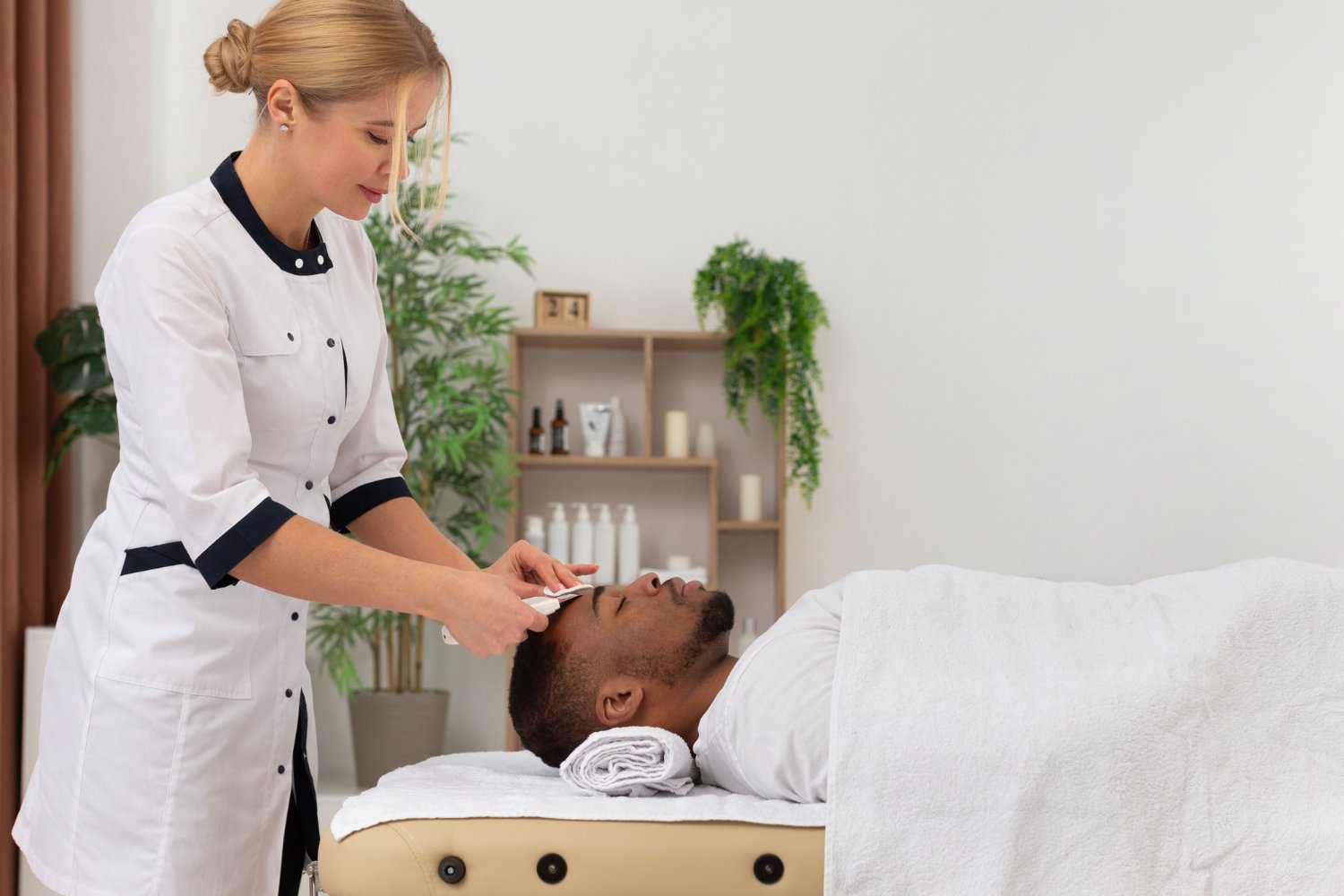
- Skincare and facial therapy – cleansing, exfoliation, facials, skin analysis
- Manicure and pedicure – nail care, nail art, gel and acrylic techniques
- Makeup artistry – day, evening, and bridal makeup
- Hair care and styling – washing, blow-drying, braiding, relaxing, basic cutting (in combined programmes)
- Body treatments – massage, waxing, body scrubs
- Spa and wellness treatments
- Salon/spa hygiene, health and safety
- Client consultation and communication
- Salon management and entrepreneurship
- Digital literacy and ICT skills
- Employability and life skills
A sample outline from a Nairobi college’s diploma includes personal development, microbiology, facial care, makeup, nail technology, henna application, threading, tweezing, body treatment, massage, waxing, and client care. This reflects the industry-wide push to combine technical beauty skills with soft skills like client care and basic business knowledge, since many graduates go on to run their own salons.
Skills You Will Gain
By the end of the programme, you should be able to:
- Perform professional facials, manicures, pedicures, and body treatments
- Apply makeup for different occasions and skin types
- Safely use salon and spa equipment and products
- Understand skin and hair types and recommend suitable treatments
- Maintain hygiene and safety standards required in salons and spas
- Manage client bookings, records, and basic salon finances
- Market and grow a beauty business, including on social media
Career Opportunities After a Beauty Therapy Diploma
A beauty therapy diploma opens doors in both formal employment and self-employment.
Employment Opportunities
- Beauty therapist / esthetician in a salon or spa
- Spa therapist in hotels and resorts (a growing area given Kenya’s tourism sector)
- Skin care or beauty consultant for cosmetic and skincare retail brands
- Makeup artist for events, weddings, film, and media
- Nail technician
- Salon or spa supervisor/manager
- Sales representative for beauty and cosmetic product companies
- Trainer/instructor at a beauty college (usually after gaining experience and higher qualifications)
Real job postings reflect this range: recent listings include a Skin Consultant role in Nairobi for a Korean skincare and beauty retailer, a Spa Therapist position at a hotel spa, and a beauty and skincare role at a pharmacy chain combining beauty services with product sales.
Self-Employment Opportunities
Many diploma holders choose to:
- Open a salon or beauty spa
- Run a mobile beauty service (home visits for makeup, facials, or nails)
- Start a bridal beauty business
- Sell beauty and skincare products alongside offering services
- Specialise in a niche such as microblading, lash extensions, or nail art
Self-employment is especially common because beauty therapy diplomas teach practical, income-generating skills that don’t strictly require formal employment to be useful.
Expected Salary for Beauty Therapists in Kenya
Salaries in the beauty industry vary widely depending on your employer, location, experience, specialisation, and whether you’re employed or self-employed. Based on current job postings in Kenya:
- Entry-level roles (e.g., skin consultants, junior salon/spa staff) commonly advertise gross salaries in the range of Ksh 20,000–40,000 per month, such as a recent Nairobi skin consultant role advertised at around Ksh 30,000 gross.
- Experienced beauty therapists and spa therapists, especially in hotels, resorts, and established spas, can earn more, with total pay influenced by tips, commissions on products/services sold, and allowances.
- Salon/spa managers and specialists with several years of experience and a strong client base typically earn the most, and self-employed salon owners’ income depends entirely on their client volume and pricing.
Because salary data for this profession varies enormously by source and is not consistently tracked by a single official body, treat any single “average salary” figure with caution. The most reliable approach is to check current job listings on Kenyan job boards (such as MyJobMag or Corporate Staffing Services) for your target role and location, and to talk to salon/spa owners directly about realistic take-home pay, including commission structures.
Key takeaway: Formal employment in beauty therapy tends to start modestly, but income can grow significantly with experience, specialisation (e.g., bridal makeup, lash and brow services), and especially through self-employment.
Industries That Employ Beauty Therapy Graduates
- Hair and beauty salons
- Day spas and hotel/resort spas
- Cosmetic and skincare retail companies
- Bridal and events companies
- Film, television, and media production (makeup artistry)
- Cruise lines and international hospitality (for those who pursue further certification)
- Health and wellness clinics offering aesthetic treatments
Best Colleges Offering Diploma in Beauty Therapy in Kenya
Beauty therapy diplomas are offered by a mix of public TVET institutions, private beauty colleges, and specialised hospitality colleges. Here’s how they generally differ:
Public TVET Institutions
Public technical colleges registered with TVETA and examined by TVET CDACC or KNEC offer more standardised, nationally recognised diplomas, often at lower fees than private colleges. Public institution fees for TVET diploma programmes generally fall between Ksh 30,000 and Ksh 70,000 per year, and these institutions qualify for government subsidies and HELB loans. To find public colleges offering this specific diploma, check the KUCCPS student portal (students.kuccps.net), which lists institutions, course codes, and cut-off requirements for programmes such as Hairdressing and Beauty Therapy.
Private Beauty Colleges
Kenya has many dedicated private beauty schools, particularly in Nairobi, Thika, Bungoma, Kisumu, and Mombasa. Examples mentioned in current college listings include beauty colleges in Bungoma, Athi River, Thika, Ruiru, and Nairobi, offering diploma or diploma-equivalent programmes lasting anywhere from 4 to 9 months, with fees ranging from roughly Ksh 4,000–15,000 per month depending on the institution.
Private colleges are often faster to enrol in, more flexible with intake dates, and may accept lower KCSE grades, but always verify:
- Whether the certificate is TVET CDACC-registered (nationally recognised) or purely in-house.
- What exam body will certify you (TVET CDACC, NITA, KNEC, or an international body like City & Guilds/JP-UK).
- Whether the institution is TVETA-licensed.
Hospitality-Linked Institutions
Kenya Utalii College, Kenya’s premier hospitality training institution, offers hospitality and tourism-focused diploma and certificate courses, and its wider network of programmes intersects with beauty and grooming skills relevant to the hospitality sector, though its core diploma listings centre on Hotel Management and Travel & Tourism Management. Some KMTC-affiliated and other specialised colleges also run beauty-related programmes; check the KUCCPS portal for the current list of institutions tied to any specific beauty therapy programme code.
Distance Learning Options
Because beauty therapy is a hands-on, practical skill, fully distance/online learning is not realistic for the practical components (facials, massage, makeup application, nail treatments). Some colleges offer blended theory-online with mandatory in-person practical sessions, but always confirm this directly, as most reputable programmes require substantial physical attendance for skills assessment and industrial attachment.
Course Fees for Diploma in Beauty Therapy
Fees vary significantly by institution type:
| Institution type | Typical fee range | Notes |
|---|---|---|
| Public TVET colleges | Ksh 30,000–70,000 per year | Uniform structures, subsidised, HELB-eligible |
| Private beauty colleges (short diploma) | Ksh 4,000–15,000 per month, or Ksh 15,000+ per term | Shorter courses, faster completion |
| Structured 2-year CDACC diploma | Varies by college | Often billed per term or per year |
Examples from current listings show a private beauty college charging around Ksh 51,500 per term for a 6-month course, while another private institute charges roughly Ksh 4,000 per month for a 5-month programme. Always ask for a full fee breakdown that includes registration, tuition, uniform/kit, examination fees, and any additional charges for practical materials (beauty products are consumed during training).
HELB and Scholarship Opportunities
Good news for cost-conscious students: TVET diploma learners, including those in beauty therapy, can access government support.
- HELB TVET loans: Students enrolled in TVETA-accredited diploma programmes may apply for HELB loans, with amounts of up to KES 60,000 per year reported for TVET diploma learners.
- Government subsidies: Public TVET institutions receive government subsidies that help keep fees lower than private colleges.
- County bursaries: Many county governments run bursary schemes for TVET students; check with your county education office.
- NG-CDF bursaries: Constituency-level bursaries may also apply, depending on your area.
To qualify for HELB or most bursaries, you generally need to be enrolled in a TVETA-licensed institution offering a CDACC or KNEC-recognised diploma, so confirm your college’s accreditation status before applying.
Professional Registration and Certification
Beauty therapy in Kenya does not currently have a single, centralised professional licensing body the way medicine or law does, but recognition still matters for your career:
- TVET CDACC issues the main nationally recognised certification for most beauty therapy and hairdressing diplomas.
- TVETA (Technical and Vocational Education and Training Authority) regulates and licenses the institutions themselves; a TVETA-licensed college signals a legitimate, monitored training provider.
- KNQA (Kenya National Qualifications Authority) can verify and align qualifications, including confirming equivalence for candidates with related certificates from other institutions or countries.
- Some colleges additionally offer internationally recognised certificates (e.g., City & Guilds, JP-UK), which can help if you plan to work abroad, though these run alongside, not instead of, local TVET CDACC certification.
Practical tip: Before enrolling, ask the college directly which body will issue your final certificate and confirm you can verify that certificate’s authenticity through TVET CDACC or KNQA.
Advantages of Studying Beauty Therapy in Kenya
- Relatively short and affordable compared to degree programmes
- Practical, hands-on training with immediate real-world application
- Multiple entry points, including for students with lower KCSE grades
- Strong self-employment potential
- Transferable skills across salons, spas, hospitality, retail, and media
- Growing demand as personal grooming and wellness spending increases in urban Kenya
Disadvantages and Honest Challenges
- Market saturation in basic services in some urban areas, meaning newer graduates may need to specialise or build a strong client base to stand out
- Income can start low in entry-level employed roles until you gain experience or a loyal clientele
- Physical demands – beauty therapy involves standing for long hours and repetitive hand movements
- Certification confusion – not every “diploma” advertised by a private college is nationally recognised, so due diligence is essential
- Startup costs for self-employment – opening your own salon or spa requires capital for space, equipment, and products
Who Should Take This Course?
A Diploma in Beauty Therapy is a good fit if you:
- Enjoy hands-on, creative work and have patience for detail-oriented tasks
- Are comfortable working closely with clients and providing a service-oriented experience
- Want a shorter path to employment or self-employment than a university degree offers
- Are interested in entrepreneurship and eventually running your own salon or spa
- Have an interest in skincare, hair, makeup, or wellness as a long-term career, not just a short-term job
It may not be the best fit if you’re looking for a desk-based career, dislike direct client interaction, or are uncomfortable with the physical demands of standing and repetitive movement for extended periods.
Common Mistakes Students Make
- Choosing a college purely on price without confirming whether the certificate is TVET CDACC-registered.
- Not confirming the exam body before enrolling, then discovering the certificate isn’t recognised for HELB or further study.
- Skipping industrial attachment/practicals, which weakens real-world competence and employability.
- Underestimating the business side – many graduates are skilled technically but struggle with pricing, client retention, and basic bookkeeping when they go self-employed.
- Not building a portfolio of before/after photos and client work, which is often more persuasive to employers or clients than the certificate alone.
- Ignoring hygiene and safety training, which is critical both for client safety and for passing practical assessments.
Tips for Succeeding in the Course
- Confirm your college’s TVETA licensing and CDACC/KNEC registration before enrolling.
- Take the entrepreneurship and salon management units seriously, even if you plan to be employed rather than self-employed at first.
- Build a portfolio from day one; photograph your practical work (with client consent) for future job or business use.
- Seek out additional short courses or certifications in specialised, higher-paying skills such as lash extensions, microblading, or advanced skincare once you’ve completed your diploma.
- Use your industrial attachment period to network and demonstrate reliability; many attachment placements lead directly to job offers.
- Keep up with product and technique trends through beauty industry pages, trade shows, and supplier training sessions.
Frequently Asked Questions
1. What is the minimum KCSE grade needed for a Diploma in Beauty Therapy in Kenya? It depends on the institution. Public TVET colleges typically require at least a C- (minus), while several private beauty colleges accept D+ or D. Always confirm directly with your chosen college since there’s no single national cut-off for this course.
2. How long does a Diploma in Beauty Therapy take in Kenya? Duration ranges from about 4–9 months at some private colleges to full 2-year structured diploma programmes at TVET CDACC-registered institutions, especially when you progress through certificate grades before the diploma level.
3. Is a Diploma in Beauty Therapy recognised for HELB loans? Yes, provided you’re enrolled at a TVETA-accredited institution offering a CDACC or KNEC-recognised diploma. TVET diploma students can generally access HELB loans of up to about Ksh 60,000 per year.
4. What’s the difference between a certificate and a diploma in beauty therapy? A certificate (often staged as Grade III, II, I) is a shorter, more basic qualification, while a diploma is more advanced and comprehensive, typically requiring longer study and covering deeper technical and business content. Many students progress from certificate to diploma level.
5. Can I study Diploma in Beauty Therapy through KUCCPS? Yes. Beauty and hairdressing-related programmes appear on the KUCCPS student portal under titles like “Hairdressing and Beauty Therapy.” Check students.kuccps.net for the current list of institutions, course codes, and cut-off requirements.
6. How much does a Diploma in Beauty Therapy cost in Kenya? Public TVET colleges generally charge Ksh 30,000–70,000 per year, while private beauty colleges vary widely, from around Ksh 4,000 per month to Ksh 50,000+ per term depending on the institution and course length.
7. What can I do with a Diploma in Beauty Therapy after graduating? You can work as a beauty therapist, spa therapist, makeup artist, nail technician, or beauty consultant, or become self-employed by opening a salon, spa, or mobile beauty business.
8. Is Beauty Therapy a good career in Kenya? It can be a solid, practical career, especially for self-motivated individuals willing to build a client base or specialise in higher-demand skills. Entry-level formal employment pay tends to be modest, but income potential grows with experience, specialisation, and self-employment.
9. Do I need a diploma to open my own salon in Kenya? No formal law requires a diploma to open a salon, but proper training significantly improves your skills, client trust, and ability to charge premium prices, and some skills (like certain chemical treatments) genuinely require proper training to perform safely.
10. Which body certifies Diploma in Beauty Therapy graduates in Kenya? Most diploma programmes are certified by TVET CDACC, with TVETA licensing the training institutions themselves. Some private colleges also offer additional international certifications such as City & Guilds or JP-UK.
11. Can I study Beauty Therapy online in Kenya? Not fully, since the practical components (facials, massage, makeup, nail work) require hands-on, in-person practice and assessment. Some colleges may offer blended theory content online, but practicals and industrial attachment require physical attendance.
12. What subjects or skills help before joining a Beauty Therapy diploma? No specific KCSE subjects are usually mandatory, but a genuine interest in art, biology (for understanding skin and body), and business studies can be helpful, along with strong interpersonal and communication skills.
Final Verdict: Is a Diploma in Beauty Therapy Right for You?
A Diploma in Beauty Therapy is a practical, relatively fast, and increasingly relevant qualification for Kenyan students who enjoy hands-on work and want a career with both employment and entrepreneurship potential. It suits KCSE graduates who may not have qualified for more competitive courses, working adults looking for a skills-based career change, and anyone genuinely passionate about skincare, hair, makeup, and wellness.
Before you enrol, do your homework: confirm the college is TVETA-licensed, check whether the certificate is TVET CDACC-registered (not just an in-house diploma), compare fees and course content across a few institutions, and check the KUCCPS portal if you want a publicly funded, HELB-eligible option. Talk to recent graduates or salon owners about real earning potential in your target town or city, since income varies significantly by location and specialisation.
Next steps: Shortlist 2–3 colleges (a mix of public and private), confirm their exam body and accreditation status, request a full fee breakdown, and if eligible, check your HELB TVET loan options before making a final decision.
Read also:
- Diploma in Graphic Design in Kenya: Requirements, Fees, Colleges, and Career Guide (2026)
- Diploma in Digital Marketing in Kenya: Colleges, Fees, and Career Guide (2026)
- Diploma in Computer Science in Kenya: Requirements, Colleges, Fees & Careers (2026 Guide)
- Diploma in Interior Design in Kenya: Colleges, Requirements, Fees & Career Guide