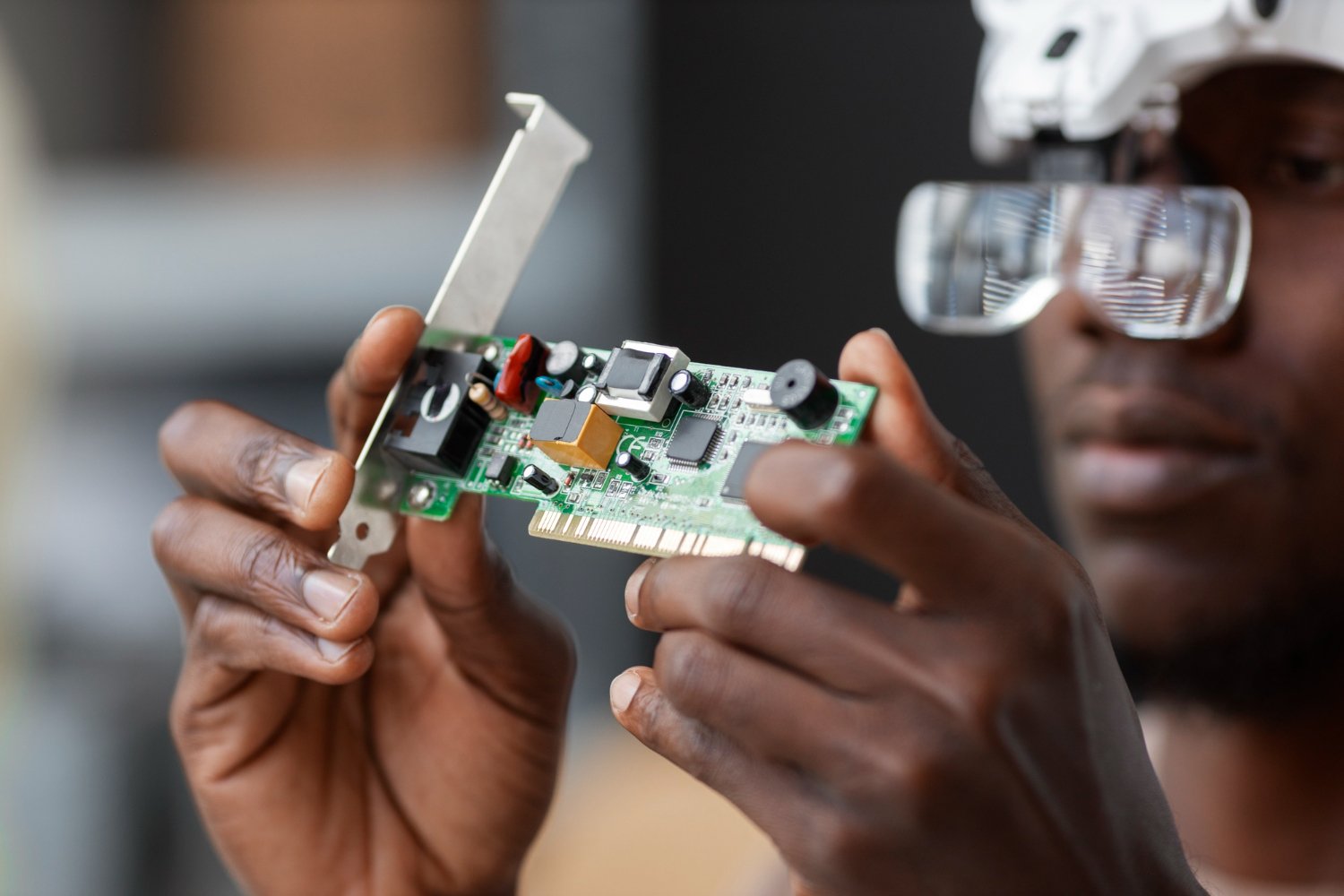

Behind every diagnosis a doctor makes is a laboratory result — a blood test, a culture, a biopsy reading — produced by a trained medical laboratory professional. If you’re drawn to science, precision work, and healthcare but don’t necessarily want direct patient-facing nursing or clinical roles, the medical lab diploma is one of the most practical and employable health science qualifications in Kenya.
This guide is written for KCSE graduates deciding on a laboratory technician course, parents comparing health science options, and working adults exploring a switch into diagnostics. It covers exact entry requirements, realistic diploma lab science Kenya fees, the colleges that offer it, how professional licensing works, and what you can expect to earn once qualified.

What Is a Diploma in Medical Laboratory Science?
The Diploma in Medical Laboratory Sciences (sometimes listed as Medical Laboratory Technology, depending on the institution) is a Level 6 KNQF qualification that trains students to collect, process, and analyze human specimens — blood, urine, stool, tissue, and other samples — to support disease diagnosis, treatment monitoring, and research. Graduates work as medical laboratory technicians and technologists in hospital labs, diagnostic centres, blood transfusion services, public health programmes, and research institutions.
Like nursing, medical laboratory practice in Kenya is a regulated profession. Training institutions must be recognized, and graduates must register and obtain a practicing license from the Kenya Medical Laboratory Technicians and Technologists Board (KMLTTB) before they can legally work in the field. KMLTTB was established under the Medical Laboratory Technicians and Technologists Act (Cap 253A of the Laws of Kenya) to supervise the training, registration, licensing, and professional conduct of laboratory personnel nationwide.

Diploma in Medical Laboratory Science Requirements in Kenya
Entry requirements are broadly consistent across most accredited institutions, though exact subject combinations differ slightly by college. The general lab course requirements are:
- A KCSE mean grade of C (plain) or above
- A C (plain) in English or Kiswahili
- A C (plain) in Biology (or Biological Sciences)
- A C (plain) in Chemistry (or Physical Sciences)
- A C (plain) or C- in Mathematics or Physics, depending on the institution
Some institutions accept applicants with a Certificate in Medical Laboratory Technology/Sciences from a recognized college (sometimes with 1–2 years of relevant work experience) as an alternative entry route, letting you upgrade to the diploma without repeating KCSE-level requirements.
Quick comparison of typical entry routes:
| Entry Route | Typical Minimum Requirement | Notes |
|---|---|---|
| Direct entry (KMTC and most public colleges) | C (plain) overall, with C in Biology, Chemistry, and Maths/Physics, plus C in English/Kiswahili | Most common and most competitive route |
| Some university-based programmes | C overall with slightly different subject weighting (e.g., C- in Maths/Physics) | Varies by university senate policy |
| Certificate-to-diploma upgrading | Certificate in Medical Laboratory Technology/Sciences, often plus 1–2 years’ experience | Shorter diploma duration for upgraders at some institutions |
Because subject requirements are not perfectly uniform across every college, always confirm the exact combination with your target institution or on the KUCCPS portal before applying — a shortfall in one science subject can disqualify an otherwise-strong application.
Course Duration
- Direct-entry diploma: typically 3 years, sometimes structured as 9 trimesters at some institutions
- Certificate-to-diploma upgrading (for those with a Certificate in Medical Laboratory Technology): often shorter, commonly around 2 years, depending on the college
The programme combines classroom instruction in subjects like clinical chemistry, haematology, microbiology, parasitology, histopathology, and blood transfusion science with extensive hands-on laboratory practice and a period of supervised clinical/industrial attachment in an accredited hospital or diagnostic laboratory.
Diploma Lab Science Fees in Kenya
Fees depend on the institution type (public TVET/medical college, public university, or private college) and your sponsorship category.
KMTC Fees
At the Kenya Medical Training College — the largest and most widely attended provider of this diploma — fees for government-sponsored students in health science diplomas generally fall within the same broad public-institution range as other KMTC diploma courses, commonly cited between roughly KES 70,000 and 120,000 per year for tuition, excluding accommodation, meals, and attachment costs. A modest online application fee (recently around KES 2,072, payable via mobile money) applies when applying through the KMTC admissions portal.
University and Other Public College Fees
Where the diploma is offered through public universities, reported fee structures vary more widely — some programmes have been priced by the trimester (for example, in the region of KES 35,000 per trimester across nine trimesters), while others quote a flat annual tuition figure closer to KES 70,000 per year. Because pricing structures differ so much between a trimester system and an annual system, always ask for the full-programme total cost, not just a per-term or per-trimester figure, so you can budget accurately.
What to Budget for Beyond Tuition
- Laboratory coats, gloves, and personal protective equipment
- Practical/skills-lab fees (in addition to core tuition at some institutions)
- KMLTTB registration and licensing fees after graduation
- Accommodation and meals, if boarding
- Textbooks and clinical attachment transport/upkeep
- A one-off, non-refundable admission/application fee
Always request an official, itemized fee structure from your specific campus before enrolling, since figures can change between intakes and differ from one KMTC campus or affiliated college to another.
Best Colleges Offering the Medical Lab Diploma in Kenya
Kenya Medical Training College (KMTC)
KMTC is the most widely accessed public provider of the Diploma in Medical Laboratory Sciences, with the course offered at multiple campuses across the country as part of its broader portfolio of over 30 medical training programmes. Government-sponsored places at KMTC are generally the most affordable route into this course.
Public Universities
Several public universities run the Diploma in Medical Laboratory Sciences/Technology alongside their degree programmes, often through their schools of health sciences or continuing education departments — examples include institutions affiliated with Jomo Kenyatta University of Agriculture and Technology (JKUAT), Moi University, and other university health science campuses. Entry requirements and fee structures at these institutions can differ meaningfully from KMTC, so compare carefully.
Other Accredited Colleges
A number of other public and private colleges, including some affiliated with mission hospitals and specialized medical training institutes, are recognized by KMLTTB to offer this diploma. Always verify that any college you are considering appears on KMLTTB’s list of institutions approved to train medical laboratory personnel — training at an unrecognized institution means you will not be eligible for registration and licensing, regardless of how the course was marketed to you.
Read also: Diploma Courses in Kenya: The Complete 2026 Guide to Courses, Colleges, Fees and Careers
How to Apply
- Confirm your KCSE grades meet the specific subject and grade combination required by your target institution.
- Apply through KUCCPS (students.kuccps.net) for a government-sponsored place at KMTC or another public institution offering the diploma — this is generally the most affordable route and the one that unlocks HELB scholarship funding.
- Alternatively, apply directly to the institution if you are self-sponsoring or the college is not listed on the KUCCPS portal.
- Submit required documents: KCSE certificate/result slip, national ID or birth certificate, passport photos, and the relevant application fee.
- Report and register once placed, and begin coursework combining classroom theory, laboratory practicals, and clinical attachment.
KMLTTB Registration and Licensing
Graduating with your diploma is not the final step — you must register and obtain a practicing license from the Kenya Medical Laboratory Technicians and Technologists Board (KMLTTB) before you can legally work as a medical laboratory technician or technologist in Kenya. In general terms, the process involves:
- Completing your diploma at a KMLTTB-recognized training institution.
- Applying for registration with KMLTTB, submitting your academic documents, identification, and passport photographs as required.
- Meeting the Board’s registration and licensing regulations, which govern the qualifications, conduct, and continuing professional development (CPD) expected of registered laboratory personnel.
- Receiving your registration certificate and practicing license, which you must renew periodically and maintain through ongoing CPD in line with KMLTTB requirements.
KMLTTB also regulates and licenses private medical laboratories in Kenya, and classifies labs by the complexity of tests they are permitted to run — meaning your registration status directly affects where and at what level you are legally allowed to practice. Because exact fees, forms, and procedural steps are periodically updated, always confirm the current registration and licensing process directly on the official KMLTTB website or its eCitizen service page before applying.
Career Opportunities After a Medical Laboratory Science Diploma
Graduates can work in a wide range of settings, including:
- Public and county hospital laboratories — running routine diagnostic tests in haematology, clinical chemistry, microbiology, and parasitology
- Private hospitals and diagnostic centres — including large private labs and hospital-based diagnostic units
- Blood transfusion services — such as county and national blood transfusion centres
- Public health and research institutions — including disease surveillance programmes, research bodies, and NGOs running laboratory-based health interventions
- Pharmaceutical and biotech companies — in quality control and testing roles
- Further specialization — diploma holders can pursue higher diplomas or degrees in specific laboratory disciplines such as clinical chemistry, haematology and blood transfusion science, microbiology, histopathology, or virology
Diploma holders can also bridge into a Bachelor’s degree in Medical Laboratory Sciences at various public and private universities, typically building on their diploma with further specialization, which can open up more senior technologist and supervisory roles, as well as postgraduate study.
Medical Lab Technician/Technologist Salary in Kenya
Salaries vary by sector (public vs. private), job group, experience, and specialization. Based on available salary-data sources, typical ranges are:
| Level / Setting | Approximate Monthly Salary Range |
|---|---|
| Entry-level laboratory technician (diploma holder) | Roughly KES 30,000–70,000 |
| Medical laboratory technologist, general | Roughly KES 30,000–90,000, with top earners higher |
| Public sector, per Salaries and Remuneration Commission (SRC) job groups | Progresses through defined job groups (e.g., Job Group G/H at entry, rising with promotion and further qualifications) |
| Senior/specialized technologists (higher diploma or degree, several years’ experience) | Can rise well above entry-level ranges, particularly in specialized units or private diagnostic labs |
These figures are indicative and drawn from multiple salary-reporting sources rather than a single official pay scale, since public sector pay is periodically revised by the SRC and negotiated through collective bargaining, while private sector pay varies by employer. Treat any specific number as a starting point for research rather than a guarantee, and check current SRC job group scales or recent job postings for the most accurate picture when you are close to graduating.
Advantages of Studying Medical Laboratory Science at Diploma Level
- Strong, steady demand — every hospital, clinic, and diagnostic centre in Kenya needs laboratory personnel, and demand continues to grow with expanding healthcare access.
- Regulated, portable qualification — KMLTTB registration is a recognized professional credential, not just an academic certificate.
- Diverse work settings — from public hospitals to private labs, blood banks, research institutions, and pharmaceutical companies.
- Clear specialization and progression path — diploma holders can specialize into higher-paying niches (haematology, microbiology, blood transfusion science) or bridge to a degree.
- Less direct bedside patient-care intensity than nursing, while remaining firmly within the healthcare sector — a good fit for those who prefer bench/technical work.
Disadvantages and Honest Challenges
- Exposure risk — laboratory work involves handling potentially infectious specimens and hazardous reagents, requiring strict adherence to safety protocols.
- Entry-level pay can be modest, especially in smaller private facilities, though it improves with specialization and public sector progression.
- Equipment and reagent shortages in some public facilities can affect working conditions and the range of tests that can be performed.
- Competitive placement at top public institutions like KMTC, given high demand for a limited number of government-sponsored slots.
- Additional registration steps and costs after graduation (KMLTTB registration and licensing) that students should plan and budget for.
Who Should Choose This Course?
A medical laboratory science diploma is a strong fit if you:
- Performed well in Biology and Chemistry at KCSE and enjoy precise, methodical, science-based work.
- Want a healthcare career with strong job security but less direct, continuous patient-facing care than nursing or clinical medicine.
- Are interested in diagnostics, disease surveillance, or research as a long-term career direction.
- Want a qualification with a clear path to specialization or further degree study.
Common Mistakes to Avoid
- Ignoring exact subject-grade combinations. A shortfall in Chemistry or Biology can disqualify an application even with a strong overall mean grade.
- Enrolling at an unaccredited college. Always confirm KMLTTB recognition before paying fees — an unrecognized qualification cannot be registered or licensed.
- Underbudgeting for practicals and registration. Lab coats, protective equipment, skills-lab fees, and post-graduation KMLTTB registration costs add up beyond tuition.
- Confusing trimester fees with annual fees. Always ask for the full-year or full-programme total, not just a per-term figure, to avoid budgeting shortfalls.
- Delaying KMLTTB registration after completing coursework, which can delay your ability to start working legally in the field.
Tips for Succeeding in the Programme
- Build a strong foundation in Biology and Chemistry before you start — much of the coursework assumes solid grounding in these subjects.
- Take laboratory safety training seriously from day one; safe specimen handling is central to both your practical assessments and your future professional practice.
- Use your clinical/industrial attachment strategically — many students find their first job leads through the hospital or lab where they were placed.
- Start researching KMLTTB’s registration requirements before you graduate, so there’s no gap between finishing coursework and being able to start working.
- Consider which laboratory specialization interests you early (haematology, microbiology, clinical chemistry, etc.), since specialization can significantly affect your long-term earning potential.
Frequently Asked Questions
1. What grade is needed for a Diploma in Medical Laboratory Science in Kenya? Most institutions require a KCSE mean grade of C (plain), with a C in Biology, a C in Chemistry, a C in English/Kiswahili, and a C or C- in Mathematics or Physics. Exact combinations vary slightly by institution, so confirm with your target college.
2. How long does the medical lab diploma take? Direct entry typically takes about 3 years. Upgrading from a Certificate in Medical Laboratory Technology to the diploma is often shorter, commonly around 2 years, depending on the institution.
3. How much does the Diploma in Medical Laboratory Sciences cost at KMTC? Tuition is generally in the range of KES 70,000 to 120,000 per year, though this depends on your sponsorship category and the specific KMTC campus, and should be confirmed directly with the college.
4. Do I need to register with KMLTTB after graduating? Yes. You must register and obtain a practicing license from the Kenya Medical Laboratory Technicians and Technologists Board before you can legally work as a medical laboratory technician or technologist in Kenya.
5. Is KMTC the only place to study this diploma? No. Several public universities and other KMLTTB-recognized colleges also offer the Diploma in Medical Laboratory Sciences/Technology, though entry requirements and fees can differ from KMTC.
6. Can I study this course with a C- in KCSE? Most diploma programmes require at least a C (plain) overall with specific science subject grades. A C- may qualify you for a Certificate in Medical Laboratory Technology, which can later be upgraded to the diploma at some institutions.
7. What is the difference between a lab technician and a lab technologist in Kenya? The terms are often used somewhat interchangeably in job postings, but generally, “technologist” roles are associated with higher qualifications (diploma and above) and more complex testing responsibilities, while “technician” can refer to a broader range of qualification levels, including certificate holders, depending on the employer’s job classification.
8. What is the starting salary for a diploma-holding lab technician in Kenya? Reported figures suggest entry-level pay commonly falls in the range of roughly KES 30,000 to 70,000 per month, varying significantly by employer, sector, and location.
9. Can I get a HELB loan for this course? Yes, students placed in eligible, HELB-recognized programmes — including at KMTC — can apply for TVET funding through the HELB/HEF Variable Scholarships and Loans Funding model after receiving their admission letter.
10. Can I upgrade from this diploma to a degree later? Yes. Many diploma holders bridge into a Bachelor’s degree in Medical Laboratory Sciences at various universities, which can open up more senior, specialized, and better-paying roles.
11. What subjects are compulsory for this course? Biology and Chemistry are essentially universal requirements, alongside English or Kiswahili and typically Mathematics or Physics at a specified minimum grade — always confirm the exact combination with your target institution.
12. Is medical laboratory science a good career choice in Kenya? Yes, for students who enjoy precise, science-based work. The profession offers steady demand across public and private healthcare, diagnostics, research, and pharmaceutical sectors, with clear opportunities to specialize and advance.
13. Which laboratory specialization pays the most in Kenya? Specialized areas such as clinical chemistry, blood transfusion science, and histopathology, particularly with a higher diploma or degree and several years of experience, tend to offer stronger earning potential than general entry-level laboratory work, though this varies by employer.
Final Verdict: Is the Diploma in Medical Laboratory Science Worth It?
For KCSE graduates with strong Biology and Chemistry grades who want a hands-on, science-based healthcare career, the Diploma in Medical Laboratory Sciences is a solid, employable choice. It leads to a professionally regulated qualification with steady demand across hospitals, diagnostic centres, and research institutions in Kenya, a manageable 2–3 year training period, and a clear path to specialize further or bridge into a degree. As with any health science diploma, success depends on choosing a KMLTTB-recognized institution, meeting the exact subject requirements, and budgeting for the full cost of training, not just headline tuition figures.
Next steps: Confirm your KCSE subject grades against your target college’s exact requirements, verify KMLTTB recognition of the institution, apply through KUCCPS for a government-sponsored place if eligible, and start planning your HELB application and post-graduation KMLTTB registration well ahead of time.
Read also:
- Diploma in Nursing in Kenya: Requirements, Fees, Colleges, and Career Guide (2026)
- Diploma Courses in Kenya: The Complete 2026 Guide to Courses, Colleges, Fees and Careers
- Diploma in Clinical Medicine in Kenya: Requirements, Colleges, Fees & Careers (2026 Guide)
- Diploma in Pharmacy in Kenya: Requirements, Fees, Colleges, and Career Guide (2026)