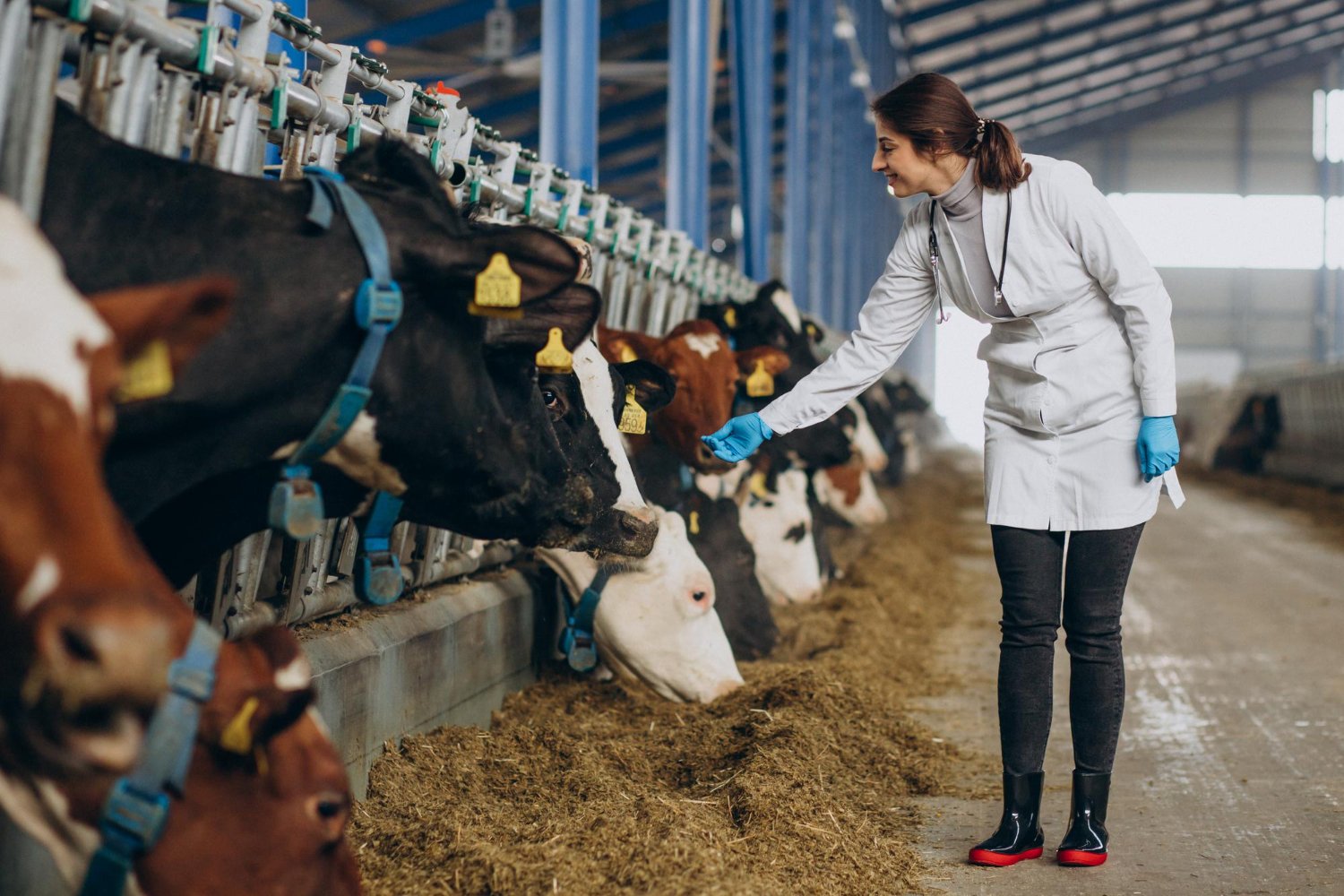
If you’re passionate about livestock, agriculture, and animal welfare, the Diploma in Animal Health and Production is one of the most respected and employable technical qualifications you can pursue in Kenya.
It trains you to become a registered veterinary paraprofessional, a role that’s in steady demand across Kenya’s large agricultural and livestock sector.

This guide is written for KCSE graduates weighing their diploma options, parents comparing colleges, and working adults in agriculture looking to formalise their skills.
You’ll learn exactly what grades you need, which institutions offer this diploma, how much it costs, what the course covers, and what your career and salary prospects look like once you’re a Kenya Veterinary Board (KVB)-registered animal health professional.

What Is a Diploma in Animal Health and Production?
A Diploma in Animal Health and Production (sometimes titled Diploma in Animal Production and Health Management, or offered as a livestock production diploma) is a technical qualification that trains “veterinary paraprofessionals” — skilled personnel who diagnose and treat common animal diseases, manage livestock production, and support veterinary surgeons, but who are not themselves veterinary doctors.
In Kenya, the profession is regulated by the Kenya Veterinary Board (KVB), established under the Veterinary Surgeons’ and Veterinary Para-professionals (VSVP) Act No. 29 of 2011, which governs the training, registration, and practice of both veterinary surgeons and veterinary paraprofessionals in Kenya.
This means that, unlike some diploma courses, this one comes with a clear professional registration pathway that directly affects your ability to work legally in the field.
Quick definition: A Diploma in Animal Health and Production is a 2–3 year technical qualification that trains you to diagnose, treat, and prevent common livestock diseases, manage animal production systems, and, once registered with the KVB, practise as a professional Animal Health Assistant or equivalent paraprofessional in Kenya.
Why Choose This Diploma in Kenya?
- Kenya’s economy is deeply agricultural. Livestock keeping (dairy, beef, poultry, sheep, goats, and increasingly aquaculture) is a major income source for millions of Kenyan households, creating consistent demand for animal health expertise.
- Clear professional regulation. Registration with the KVB gives your qualification legal recognition and professional standing, unlike some unregulated technical fields.
- Multiple career paths. You can work in government veterinary services, private veterinary practices, NGOs, agribusiness companies, dairy cooperatives, or start your own animal health supply/service business.
- Progression opportunities. Certificate holders can upgrade to diploma level, and diploma holders can further progress to a Bachelor of Veterinary Medicine or related degrees.
- Government employment pathway. County and national government agencies regularly advertise Animal Health Assistant positions specifically requiring this diploma and KVB registration.
Admission Requirements for Diploma in Animal Health and Production
Requirements differ between direct-entry diploma programmes and progression (certificate-to-diploma) routes, and also between university-affiliated colleges and TVET institutions. Always check both the institution’s requirements and the Kenya Veterinary Board’s minimum entry requirements, since KVB registration eligibility is what ultimately allows you to practise.
Direct KCSE Entry (University-Affiliated Diploma Programmes)
Universities offering this diploma, such as Chuka University, tend to have the strictest requirements. Typical admission routes include:
- KCSE mean grade C with at least grade C in Biology, C– in Chemistry, C- in Mathematics or Agriculture, and C- in English or Kiswahili
- KCE/EACE Division 2 with at least a credit in Biology, Chemistry, and Mathematics/Agriculture from Senate-recognised institutions
- KACE with at least one Principal pass in Biology and one Subsidiary pass in Chemistry
TVET/Agricultural College Entry
Public agricultural colleges and TVET institutions (such as Bukura Agricultural College) generally admit at a lower grade than university-run programmes, often around C- (minus) with a credit pass or C- specifically in Biology, though exact requirements vary by college.
KVB’s Minimum Entry Requirements
Since the Kenya Veterinary Board ultimately determines whether your training qualifies you for professional registration, its published minimum requirements matter most in the long run. According to the KVB, acceptable pathways into diploma-level training/upgrading generally include:
- A credit pass in at least a two-year certificate course in Agriculture, Animal Production, Animal Husbandry, Range Management, Wildlife Health, or Dairy Technology (or equivalent) from a KNQA-recognised institution
- A KACE-level certificate with a principal pass in Biology and at least a subsidiary pass in Chemistry, Physics, or Mathematics
- Any other qualification recognised as equivalent by the KVB
Key takeaway: If your long-term goal is professional registration and legal practice as an animal health paraprofessional, don’t just check a college’s admission letter — confirm directly with the Kenya Veterinary Board (kenyavetboard.or.ke) that your intended training pathway and institution will qualify you for registration after graduation.
Read also: Diploma in Beauty Therapy in Kenya: Full 2026 Guide
Course Duration
- University-affiliated diploma programmes: Commonly around 2.5 years (5 semesters), as seen at JKUAT’s School of Agriculture and Enterprise Development.
- TVET/agricultural college diplomas: Typically 3 academic years, such as the three-year Diploma in Animal Health and Production and the three-year Diploma in Animal Production and Health Management offered at Bukura Agricultural College.
- Some institutions structure the diploma as 7 terms, which works out to a little over 2 years depending on the academic calendar.
- Certificate-to-diploma upgrading route: Certificate holders (typically a 2–2.5 year certificate) can upgrade to diploma level, adding roughly another 2 years, so the full journey from certificate to diploma can take 4–5 years in total if not started directly at diploma level.
Course Units and What You’ll Learn
The curriculum blends animal health (veterinary paraprofessional) content with livestock production and farm business skills. Typical units include:
- Anatomy and physiology of farm animals
- Animal disease diagnosis, treatment, and prevention
- Parasitology and vector control
- Animal nutrition and feed formulation
- Animal breeding and reproduction
- Livestock production systems (dairy, beef, poultry, small ruminants, pigs)
- Meat inspection and food safety
- Veterinary public health
- Farm records and animal health economics
- Extension methods and communication
- Range management and rangeland ecology (in some programmes)
- Entrepreneurship and agribusiness management
- Industrial attachment/practical placement on farms, in veterinary clinics, or with government veterinary offices
Skills You Will Gain
By the end of this diploma, you should be able to:
- Diagnose and treat common livestock diseases under appropriate supervision
- Carry out vaccinations, deworming, dipping, and other preventive health interventions
- Assist in surgical and clinical procedures under a veterinary surgeon’s guidance
- Conduct meat inspection and enforce basic food safety standards
- Advise farmers on animal nutrition, breeding, and general husbandry
- Manage livestock production records and farm-level animal health data
- Support disease surveillance, outbreak response, and livestock movement control
- Run or manage a livestock enterprise or animal health supply business
Career Opportunities After the Diploma
Employment Opportunities
- Animal Health Assistant in county or national government veterinary services (one of the most common employers)
- Veterinary paraprofessional in private veterinary clinics and animal hospitals
- Livestock/dairy extension officer with agribusiness companies or cooperatives
- Field officer with NGOs and development organisations working in livestock, food security, or agriculture
- Quality control/meat inspector at abattoirs and food processing facilities
- Sales and technical support representative for animal health product companies (vaccines, feeds, pharmaceuticals)
- Farm manager on commercial livestock or dairy farms
- Laboratory technician in veterinary diagnostic laboratories
Real government job postings illustrate the pathway clearly: a recent county-level advertisement for Animal Health Assistant I required a diploma in Animal Health from a recognised institution and KVB registration, with duties including disease control, vaccination, treating sick animals, and post-mortem examinations. Similarly, a Kilifi County posting for Animal Health Assistant II required at least a two-year certificate in Animal Health/Animal Health and Production plus KVB registration, showing that both certificate and diploma holders are actively recruited, though diploma holders typically qualify for higher grades and pay.
Self-Employment Opportunities
- Running a private animal health/agrovet supply shop
- Offering mobile animal health and artificial insemination services to farmers
- Consulting for dairy cooperatives and farmer groups
- Operating a commercial poultry, dairy, or livestock enterprise
- Providing contract meat inspection or livestock extension services
Expected Salary for Animal Health and Production Diploma Holders
Salaries vary depending on whether you work in government, private practice, or NGOs, and by county, experience, and job group.
- County government entry-level positions (Animal Health Assistant II) have been advertised on a salary scale of around Ksh 22,270–30,020 per month, plus allowances set by the Salaries and Remuneration Commission (SRC).
- General labour-market data for veterinary technicians and assistants in Kenya shows a typical starting range of about Ksh 32,576–85,307 net per month, rising to roughly Ksh 43,693–144,878 per month after five years of service, though such aggregated figures should be treated as indicative rather than exact.
- Senior/specialised roles, such as those advertised directly by the Kenya Veterinary Board on defined SRC salary scales, can start from around Ksh 134,673 per month and progress upward with experience, though these tend to be more senior regulatory or technical positions rather than entry-level roles.
- Private sector and NGO roles vary widely; some postings for technical/field officer roles with development organisations advertise salaries in the Ksh 100,000–160,000 per month range for more experienced candidates, though this varies enormously by organisation and role scope.
Key takeaway: Entry-level government salaries for diploma holders typically start in the low tens of thousands of shillings per month, but pay rises meaningfully with experience, further specialisation, and moves into private sector, NGO, or senior technical roles.
Industries That Employ Graduates
- County and national government veterinary/livestock departments
- Private veterinary clinics and animal hospitals
- Dairy processing companies and cooperatives (e.g., milk processors needing farm extension staff)
- Animal feed and pharmaceutical companies
- Agribusiness and agrovet retail chains
- International and local NGOs working in agriculture, food security, and livestock development
- Meat processing plants and abattoirs
- Research institutions and veterinary diagnostic laboratories
Best Colleges Offering Diploma in Animal Health and Production in Kenya
This diploma is offered through three main types of institutions:
Public Agricultural and TVET Colleges
Bukura Agricultural College in Kakamega County is one of Kenya’s oldest and most established public agricultural training institutions. It’s a TVETA-registered public Technical and Vocational Training Centre offering both a three-year Diploma in Animal Health and Production and a three-year Diploma in Animal Production and Health Management, alongside a certificate-level programme for those wanting to progress in stages. Other public agricultural training centres and TVET institutions across the country offer similar programmes; check the KUCCPS student portal for the full current list under “Animal Health and Related” programmes.
Public Universities
Several public universities run diploma programmes in this field, often as a pathway into their degree programmes in veterinary medicine or animal science:
- Chuka University – Diploma in Animal Health and Production (Pre-Service), with defined KCSE and certificate-upgrading entry routes
- Jomo Kenyatta University of Agriculture and Technology (JKUAT) – Diploma in Animal Health and Production through its School of Agriculture and Enterprise Development, aiming to train “highly qualified, hands-on, globally competitive veterinary paraprofessionals”
- University of Nairobi, Faculty of Veterinary Medicine – Diploma-level entry routes for candidates with strong science grades or relevant certificates
- Egerton University and other agricultural universities also run related animal production and health diploma or degree pathways; confirm current offerings directly with the university
Private Colleges
A number of private colleges also offer diploma-level training in this field, often with more flexible intake schedules than public institutions. As with any technical/professional course, always confirm that a private college’s diploma is recognised by the Kenya Veterinary Board and registered with TVETA, since KVB recognition is what ultimately allows you to register as a professional after graduation.
Read also: Diploma in Interior Design in Kenya: Colleges, Requirements, Fees & Career Guide
Distance Learning Options
Like most hands-on agricultural and veterinary paraprofessional courses, this diploma cannot be completed fully online. The practical components — clinical skills, farm practicals, and industrial attachment — require physical presence at a training farm, clinic, or laboratory. Some theory units may be delivered in blended formats, but confirm this with your chosen institution.
Course Fees
Fees vary by institution type and are generally lower at public colleges than at private institutions, though public colleges also often add practical/farm-related charges.
| Institution type | Typical fee range | Notes |
|---|---|---|
| Public agricultural/TVET colleges | Varies by college; often billed per semester with additional practical/farm fees | Check current fee structures directly, as they are periodically revised |
| Public universities (diploma track) | Generally higher than TVET colleges but still below full degree fees | May include lab, farm, and practical fees |
| Private colleges | Varies widely | Confirm KVB and TVETA recognition before paying |
Because tuition structures at agricultural colleges often include separate charges for boarding, farm practicals, uniforms, and examination fees (in addition to base tuition), always request a full itemised fee schedule from your shortlisted college rather than relying on a single quoted tuition figure.
HELB and Scholarship Opportunities
- HELB TVET loans: Diploma students at TVETA-accredited institutions can generally apply for HELB loans to support their studies, in addition to standard university HELB loans for those enrolled in degree-track diploma programmes at public universities.
- Government agricultural training subsidies: Public agricultural colleges like Bukura operate as state corporations and typically benefit from government funding that helps keep tuition more affordable than private alternatives.
- County government bursaries: Many counties, especially those with strong agricultural/livestock economies, offer bursaries for students pursuing agriculture-related diplomas.
- NG-CDF bursaries: Available at the constituency level; check with your local CDF office.
- Scholarships from agricultural and livestock organisations: Some dairy cooperatives, agribusiness companies, and development organisations occasionally sponsor students in animal health and production courses as part of workforce development initiatives; check with organisations active in your region.
Professional Registration Requirements
This is one of the most important sections for anyone considering this diploma, because you cannot legally practise as an animal health paraprofessional in Kenya without registering with the Kenya Veterinary Board (KVB).
Key points:
- The KVB was established under the Veterinary Surgeons’ and Veterinary Para-professionals Act No. 29 of 2011, which replaced the earlier Veterinary Surgeons’ Act and extended registration requirements to veterinary paraprofessionals, not just veterinary surgeons.
- After completing your diploma, you generally need to register with the KVB, which may involve sitting KVB pre-registration examinations, depending on current board requirements — check the KVB’s current announcements, as the board periodically runs pre-registration examination series.
- Registered professionals are required to maintain Continuing Professional Development (CPD) points — job postings commonly require candidates to have retained all required CPD points, cited as 14 points per year in some listings — to keep their registration active.
- Government job adverts for Animal Health Assistant positions consistently list KVB registration as a mandatory requirement, alongside the diploma or certificate itself, so registration is not optional if you intend to work formally in this field.
Practical tip: Before enrolling in any college, confirm directly with the Kenya Veterinary Board (kenyavetboard.or.ke) that graduates of your intended programme are eligible for registration. This single check can save you years of frustration if a particular college’s certification isn’t recognised.
Advantages of This Diploma
- Clear, government-regulated professional pathway via KVB registration
- Strong and steady demand tied to Kenya’s large agricultural and livestock economy
- Multiple employers: government, private sector, NGOs, and self-employment
- Progression opportunities into veterinary medicine degrees or specialised postgraduate training
- Practical, hands-on training that builds real, immediately usable skills
Disadvantages and Honest Challenges
- Registration and CPD obligations add ongoing professional responsibilities (and costs) after graduation that some other diplomas don’t require
- Entry-level government pay can be modest, particularly at Job Group ‘G’ type entry positions
- Fieldwork can be physically demanding, including working with large or difficult animals, exposure to zoonotic disease risk, and travel to rural areas
- Course duration is longer than many other diplomas (often a full 3 years at TVET level), representing a bigger time investment
- Progression from certificate to diploma can extend your total study time significantly if you don’t qualify for direct diploma entry
Who Should Take This Course?
This diploma is a strong fit if you:
- Have a genuine interest in animals, agriculture, and livestock farming
- Performed reasonably well in Biology and other sciences at KCSE
- Are comfortable with fieldwork, including travel to farms and rural areas
- Want a clear, regulated professional pathway with defined registration requirements
- Are interested in eventually progressing to a veterinary medicine degree or specialised postgraduate training
It may be less suitable if you’re uncomfortable working directly with animals (including in emergency or distressing situations), strongly prefer office-based work, or are not prepared to maintain ongoing professional registration and CPD requirements after graduation.
Common Mistakes Students Make
- Enrolling in a college without confirming KVB recognition, then discovering the qualification doesn’t support professional registration.
- Confusing “Animal Health and Production” with unrelated agriculture diplomas (e.g., general agriculture or crop production), which have different curricula and career outcomes.
- Underestimating the science requirements, especially Biology and Chemistry, which are core to succeeding in the coursework.
- Not budgeting for practical/farm-related fees, which are often charged separately from base tuition.
- Skipping industrial attachment opportunities, which are often where students build the practical networks that lead to their first job.
- Forgetting to plan for CPD and registration costs after graduation, treating the diploma as the final step rather than the start of a regulated career.
Tips for Succeeding in the Course
- Strengthen your foundation in Biology and Chemistry before or during the course, as these underpin most of the clinical and production units.
- Take industrial attachment seriously — placements with government veterinary offices, private clinics, or agribusiness companies often lead directly to job offers or strong references.
- Get comfortable with basic farm records and data management, since employers increasingly value staff who can combine technical skills with good record-keeping.
- Register with the Kenya Veterinary Board as soon as you’re eligible after graduation, rather than delaying, since unregistered graduates cannot legally practise many of the roles this diploma trains for.
- Stay current on livestock disease outbreaks and animal health news in Kenya (e.g., through the Ministry of Agriculture, Livestock and Fisheries and the Directorate of Veterinary Services), since disease surveillance knowledge is directly relevant to fieldwork.
- Consider building basic entrepreneurship skills alongside your technical training if you’re interested in eventually running your own agrovet or livestock enterprise.
Frequently Asked Questions
1. What KCSE grade do I need for a Diploma in Animal Health and Production in Kenya? Requirements vary. University-affiliated programmes often require a mean grade of C with specific grades in Biology, Chemistry, and Mathematics or Agriculture, while some TVET/agricultural colleges admit at C- (minus). Always confirm the specific requirement with your target institution, and check the Kenya Veterinary Board’s minimum entry requirements if your goal is professional registration.
2. How long does the diploma take? Typically 2.5 to 3 years for direct-entry diploma programmes, depending on the institution. Progressing from a certificate to a diploma can extend the total study time to around 4–5 years if you don’t qualify for direct diploma entry.
3. Is this diploma recognised for professional practice in Kenya? Yes, provided it’s from an institution recognised by the Kenya Veterinary Board. Registration with the KVB after graduation is required to legally practise as an animal health paraprofessional, so always confirm your college’s KVB recognition before enrolling.
4. What is the difference between Animal Health and Production and general Agriculture diplomas? Animal Health and Production focuses specifically on livestock disease diagnosis, treatment, and production management, leading to KVB professional registration. General agriculture diplomas cover broader crop and farm management topics and don’t carry the same veterinary paraprofessional registration requirement.
5. Can I get a HELB loan for this diploma? Yes, students at TVETA-accredited institutions or public universities pursuing this diploma can generally apply for HELB support, alongside other funding options like county bursaries and NG-CDF bursaries.
6. What jobs can I get with this diploma? Common roles include Animal Health Assistant in government service, veterinary paraprofessional in private clinics, livestock extension officer, meat inspector, dairy/agribusiness field officer, and self-employment running an agrovet shop or livestock enterprise.
7. How much does an Animal Health Assistant earn in Kenya? Entry-level county government positions have been advertised around Ksh 22,270–30,020 per month on the Job Group ‘G’ scale, while broader labour-market data suggests veterinary technicians and assistants can earn from roughly Ksh 32,000 up to over Ksh 140,000 per month with experience, though this varies significantly by employer and role.
8. Do I need to register with the Kenya Veterinary Board? Yes. KVB registration is a legal requirement to practise as an animal health paraprofessional in Kenya, and most formal job adverts explicitly require it alongside the diploma or certificate qualification.
9. Can I upgrade from a Certificate to a Diploma in Animal Health and Production? Yes. The Kenya Veterinary Board recognises upgrading pathways for certificate holders from KVB-recognised institutions, typically requiring a credit pass and additional study to reach diploma level.
10. Which public colleges offer this diploma in Kenya? Bukura Agricultural College is one of the best-known public institutions, offering both a Diploma in Animal Health and Production and a Diploma in Animal Production and Health Management. Several public universities, including Chuka University, JKUAT, and the University of Nairobi, also offer diploma-level entry routes. Check the KUCCPS portal for the complete current list.
11. Is fieldwork required for this course? Yes, extensively. The course includes farm practicals, clinical work with animals, and a mandatory industrial attachment period, since it’s a hands-on, competency-based qualification that cannot be completed through theory alone.
12. What subjects should I focus on in high school if I want to pursue this diploma? Biology is essential, and strong performance in Chemistry, Mathematics, and Agriculture (where offered) will strengthen both your admission chances and your foundation for the coursework.
Final Verdict: Is a Diploma in Animal Health and Production Right for You?
The Diploma in Animal Health and Production stands out among Kenyan diploma options because it combines strong labour-market demand, a clearly regulated professional pathway through the Kenya Veterinary Board, and genuine relevance to Kenya’s agriculture-driven economy. It suits science-leaning KCSE graduates who enjoy hands-on fieldwork, are comfortable working with animals, and want a technical career with room to grow — whether through government employment, private practice, NGO work, or their own agribusiness.
Before enrolling, confirm three things: that your KCSE grades meet your target institution’s specific requirements, that the college’s certification is recognised by the Kenya Veterinary Board for professional registration, and that you understand the full fee structure, including practical and farm-related charges.
Next steps: Shortlist 2–3 institutions (comparing a public agricultural college like Bukura against a university-based diploma track), verify KVB recognition directly with the board, request a full fee breakdown, and check your HELB and county bursary eligibility before making your final decision.
Read also:
- Diploma in Interior Design in Kenya: Colleges, Requirements, Fees & Career Guide
- Diploma in Real Estate Management in Kenya: Requirements, Colleges, Fees & Careers
- KMTC Diploma Courses in Kenya: Full List, Admission Requirements, Fees & Career Guide
- Diploma in Graphic Design in Kenya: Requirements, Fees, Colleges, and Career Guide (2026)